We’ve been exploring the Colorado Plateau for about two weeks now, and I’ll admit that my geography skills are such that I didn’t even know this place existed until we drove all over it. It’s essentially an elevated expanse of land that stretches across parts of Arizona, Colorado, New Mexico and Utah, and it is jam-packed with stunning rock formations. Parts of it are also very scarcely populated, so the nights are incredibly dark, which makes for pretty spectacular star gazing.
Sadly, we haven’t been able to capture any of the starry nights yet, but Toyo’s working on figuring it out. In the meantime, here are some quick notes and pictures of the places we’ve been:
Mesa Verde National Park, Colorado
This is one of the stops I anticipated most eagerly because it’s so different from the other national parks, as most of the sites were man-made about 800 years ago. Ancestral Puebloans built rooms and homes out of caves a few dozen feet below the tops big mesas, where they farmed. I think it’s so inventive and genius, it’s hard to believe the idea didn’t catch on.
The cliff dwellings — built from simple-yet-sturdy bricks, and series of ladders and rock holds — are still around to see and walk through … absolutely incredible.

View from the top of a mesa.

Picnic on the cliff.

Our tour group making the first ladder climb. There were about 3 ladders and a few tunnels to crawl through to see the cliff dwelling. People were smaller 800 years ago…

Remotely representing Team Rayma Dog on Miles For Moffitt race day!

This was the best selfie we could get … we might one day do a series on all the bad ones because it’s truly amazing how terrible we are at these pics.
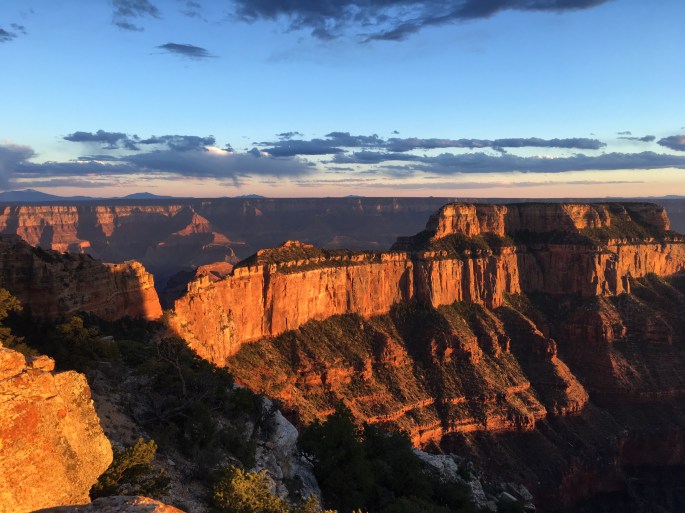
Canyonlands National Park, Utah
Canyonlands was lovely and really, really in the middle of nowhere. I’ll let the pictures speak for themselves on this one, and also inform you that this is by far the most remote camping Tony and I have ever done. We took a dirt road to a place called Hamburger Rock, placed our $10 nightly fee into a freestanding box, and called it a campsite. There were about 10 tent campers not too far away but other than that, nothingness for miles.

Another terrible selfie…

Campsite.

Hamburger Rock, if you look to the left, you can see our RV.

Really lovely lighting at our campsite just before sunset.
Moab, Utah, and Arches National Park, Utah
At the recommendation of a checkout lady at Target (you read that right) we decided to stay a few nights in Moab, and make the short drive to Arches, for a little taste of civilization after the gloriously quiet night at Hamburger Rock.
Moab was a great little town, with a fun brewery and eclectic crowds but it’s hard to identify why it appealed to settlers. Here’s an actual conversation we had pondering this mystery:
Christina: “Do you think this is a place where, if you were travelling west in a covered wagon, at like 5 miles per hour, you’d get here, stop and say, ‘This it is. We made it.’?”
Toyo: “I feel like this is a place where someone said, ‘I’m done, guys. Just go on without me. I might catch up later.’ Everyone else was like, ‘But this is the Oregon Trail, and we aren’t in Oregon yet.’ But Lewis and Clark be damned, he didn’t want to go any farther.
“Then, because no one else was here, he claimed all the land and made a bunch of money.”
Christina: “People paid a bunch of money for this land?”
Toyo: “Yeah, over the generations. He got the Arches, and all this stuff around them, then sold it off to all the people here. The only problem is the government took a lot of it.”
Christina: “The government? What did they take?”
Toyo: “Well, the national parks. They got the Arches and Canyonlands. That’s premium real estate. Scenic.”
Christina: “And then what?”
Toyo: “The original settler kept the rest and passed it down to his kids and grandkids, and more people came and all that … So we got nothing else to make more margaritas, huh?”
The store only had 6 limes; all were juiced.
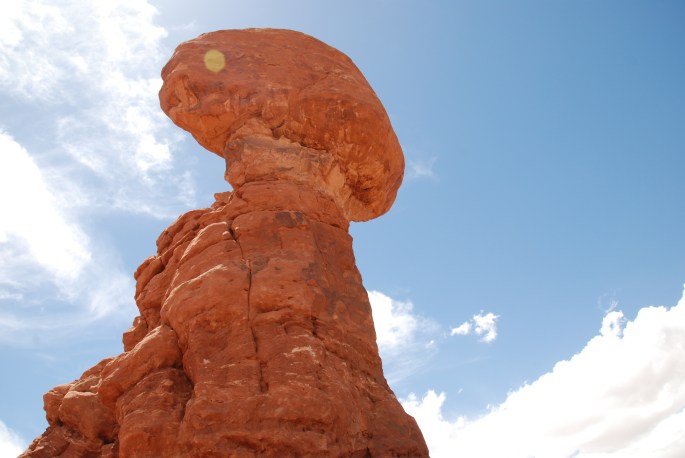
The sights in Arches were very impressive. There are a few places where I feel like the rocks might be defying gravity, but I’ll leave that up to the physicists and geologists to determine. I just think they’re neat to look at.




 Recalculating...